Tissue-specific differences of gene expression variance in mutation accumulation lines of mice
摘要
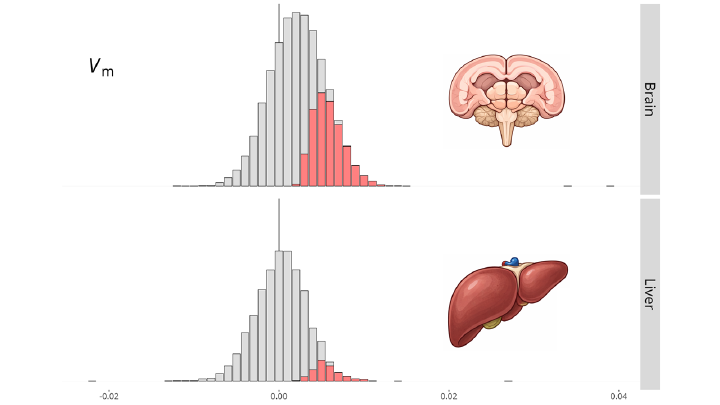
New mutations are the source of all genetic variation, including variation affecting quantitative phenotypes. Here, in order to evaluate the impact of mutations on the integrated function of entire tissues, we estimated the mutational variation (Vm) introduced by new mutations each generation for gene expression. Using deep transcriptome sequencing, we estimated Vm for brain and liver gene expression in individuals from a mutation accumulation experiment (MA) with the C3H inbred mouse strain. Expression was measured in 200 mice from 40 MA lines maintained for 15–19 generations and in 100 mice from 20 control lines. The control lines allow us to account for environmental variation in gene expression. Based on the difference in the between-line variance component for expression between the MA lines and controls, the median Vm in the brain was 2.22 × 10e−3, while in the liver it was markedly lower (Vm = 0.35 × 10e−3). A greater proportion of genes also showed Vm values statistically higher than zero in the brain (29%) than in the liver (7%). These differences could be due to a higher rate of mutation-driven transcriptome evolution in the brain compared to the liver, which we discuss in the context of differences in the mutational target, distribution of mutation effects, cellular complexity, and estimation biases. A differential expression analysis revealed minimal contributions to Vm from the subset of genes that have significant variation in expression. This indicates that most new mutations exert small effects on gene expression and go undetected in differential expression analyses.